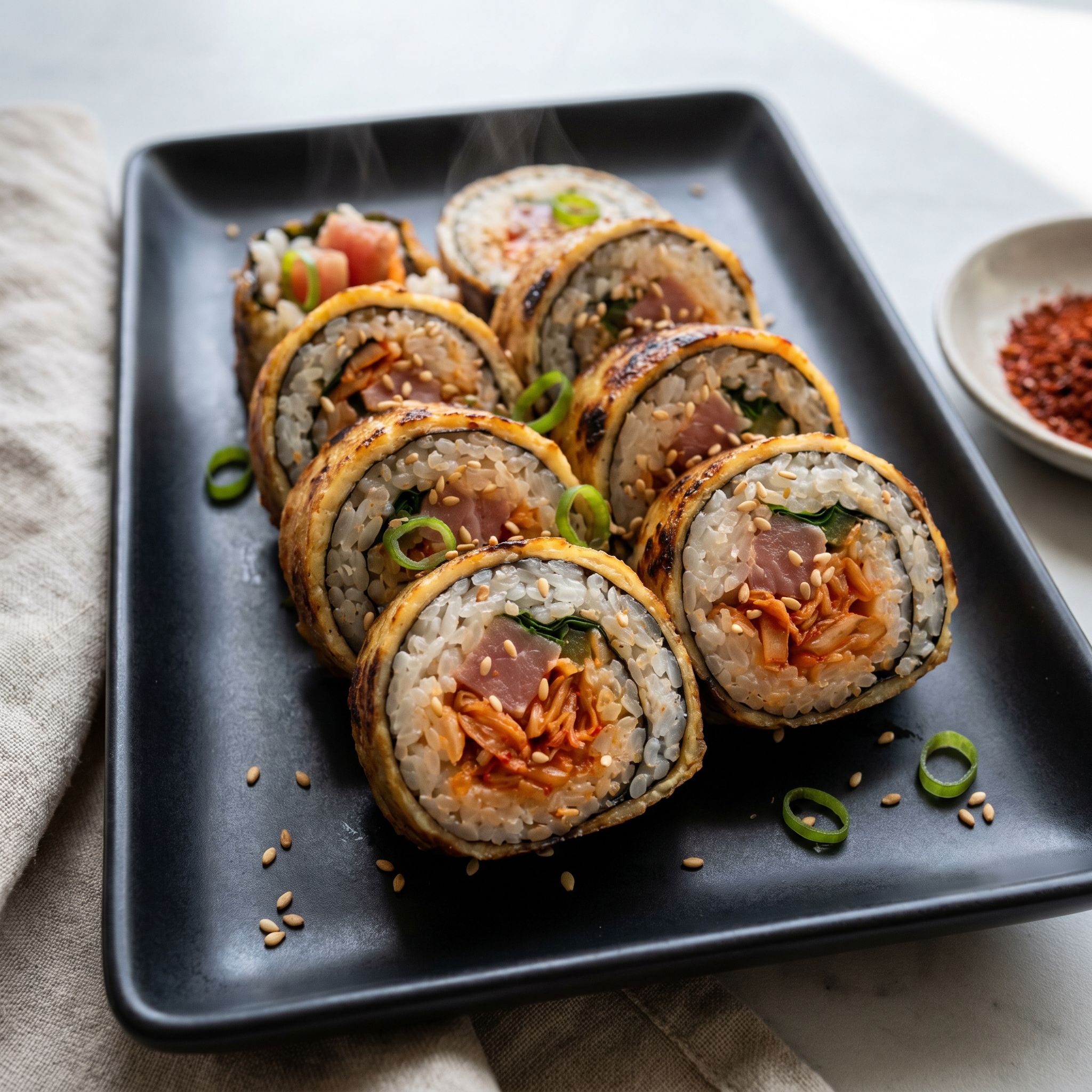
Description
This trending twist on classic kimbap wraps seasoned rice with canned tuna, aged kimchi, and sesame oil for a spicy, umami-packed bite. Rolled in seaweed and pan-seared for crisp edges, it balances fiery gochugaru heat with cooling rice and briny fish. Ready in under 30 minutes, it's a portable lunch or snack that captures viral Korean street food vibes.
Cultural Background
Kimbap (or gimbap) is a beloved Korean dish of rice and fillings rolled in dried seaweed sheets, popular as portable picnic or on-the-go food. Its origins are debated but often linked to adaptations of Japanese makizushi introduced during the 1910-1945 colonial period, with Koreans substituting sesame oil for rice vinegar and incorporating local banchan-style fillings. Traditions of wrapping rice and sides in seaweed date back further to the Joseon era, evolving into the modern rolled form by the early 20th century. Spicy tuna variations reflect contemporary street food trends blending canned tuna with fermented kimchi for bold umami.
Recipe Info
PREP TIME: 15 minutes
COOK TIME: 10 minutes
TOTAL TIME: 25 minutes
SERVINGS: 4
DIFFICULTY: Easy
Ingredients
- 4 cups cooked short-grain white rice, slightly warm
- 1 tablespoon toasted sesame oil
- 1/2 teaspoon salt
- 1 teaspoon toasted sesame seeds
- 1 (5-ounce) can oil-packed tuna, drained well
- 3/4 cup aged kimchi, drained and finely chopped
- 2 tablespoons mayonnaise
- 1 tablespoon gochugaru (Korean chili flakes), or to taste
- 1 green onion, finely chopped
- 1 teaspoon soy sauce
- 4 sheets roasted seaweed (gim/nori)
- 1 tablespoon neutral oil, for pan-searing
- Optional: 8-12 perilla leaves for lining
Instructions
- In a large bowl, gently mix the warm cooked rice with 1 tablespoon toasted sesame oil, 1/2 teaspoon salt, and 1 teaspoon sesame seeds until evenly seasoned; set aside to cool slightly while preparing the filling.
- In a medium bowl, combine the drained tuna, chopped aged kimchi, 2 tablespoons mayonnaise, 1 tablespoon gochugaru, chopped green onion, and 1 teaspoon soy sauce; stir thoroughly with a fork until the mixture is cohesive and well-distributed, tasting and adjusting spice level as needed.
- Place a bamboo sushi mat or clean kitchen towel on a flat surface; lay one sheet of roasted seaweed shiny side down on the mat.
- Spread about 1 cup of the seasoned rice evenly over the seaweed, leaving a 1-inch border at the top edge; if using, arrange 2-3 perilla leaves in a single layer across the center of the rice.
- Spoon one-quarter of the spicy tuna-kimchi filling in a horizontal line across the middle of the rice, about 1 inch thick.
- Using the mat, tightly roll the kimbap from the bottom edge upward, applying gentle pressure to form a compact cylinder; seal the top edge with a bit of water or rice if needed, then repeat with remaining sheets and filling to make 4 rolls.
- Heat 1 tablespoon neutral oil in a large nonstick skillet over medium heat until shimmering; add the rolls seam-side down and sear for 1-2 minutes per side, turning gently with tongs until all sides are golden and crisp, about 6-8 minutes total.
- Remove from heat, let rest 1 minute, then slice each roll into 6-8 bite-sized pieces with a sharp knife wiped clean between cuts; serve immediately or at room temperature.
Tips
- Drain the tuna and kimchi thoroughly by pressing in a fine mesh sieve or cheesecloth to prevent soggy rolls and ensure the filling binds properly.
- Avoid overfilling the rolls or using too much rice near the edges, which is a common mistake that causes tearing or loose rolls during the rolling and searing process.
- For a milder version, substitute gochugaru with sriracha or reduce the amount; aged kimchi can be swapped with fresh kimchi if unavailable, though it will be less tangy.
Nutrition
Calories: 380
Protein: 14g
Carbs: 52g
Fat: 13g
Tags
Korean