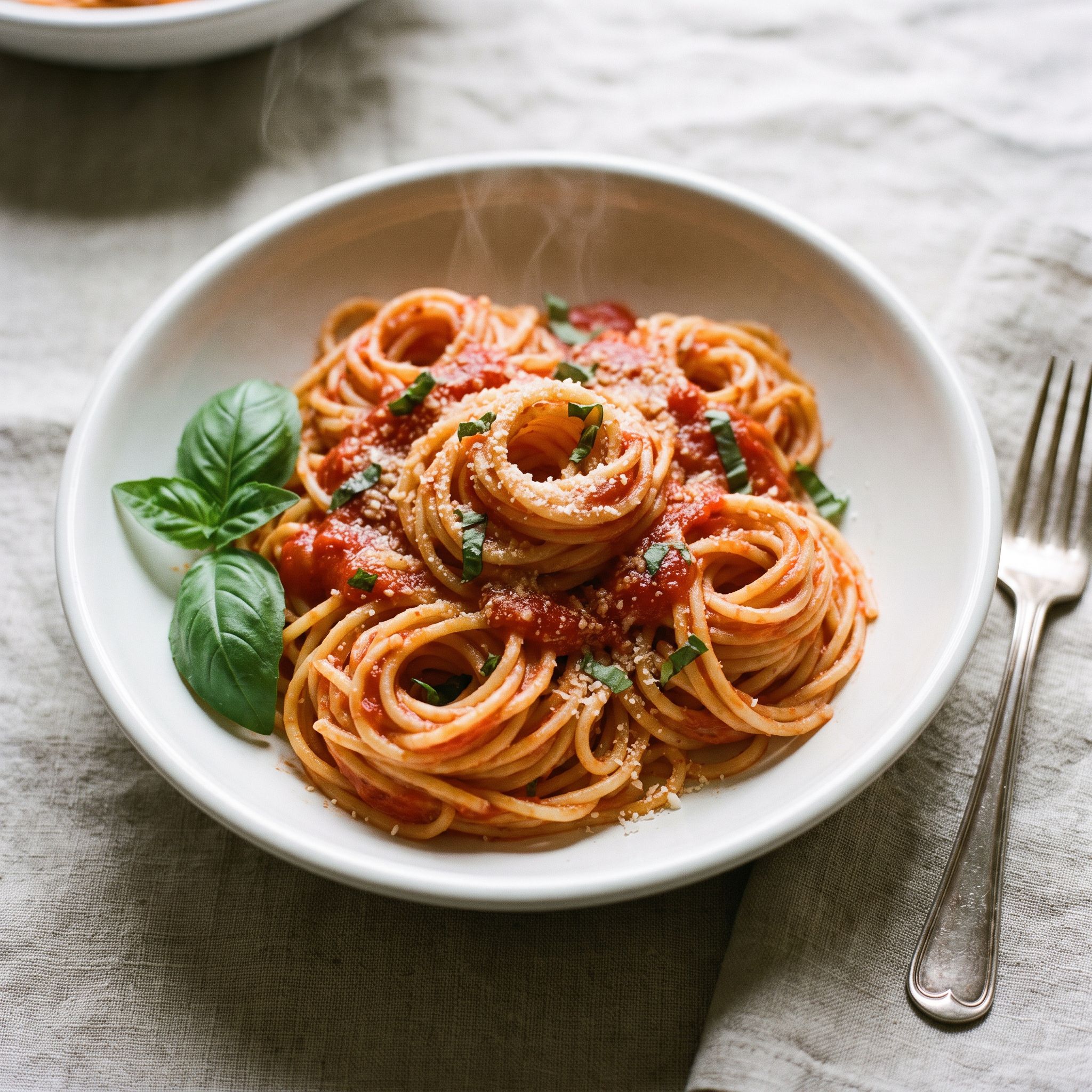
Description
Starch in the dried durum wheat pasta absorbs water and swells as it heats. The granules lose their tight crystalline packing so long straight amylose chains and branched amylopectin chains spill into the water, thickening it and allowing the sauce to cling.
Cultural Background
Dried pasta reached Sicily in the ninth century when Arab rulers controlled the island. The geographer Muhammad al-Idrisi recorded large-scale production of thin dried strands near Palermo in 1154 while working for the Norman king Roger II. The strands spread north and became a staple in Naples by the seventeenth century after mechanical presses lowered their cost. Tomatoes arrived from the Americas in the sixteenth century but only entered everyday pasta sauces in the late eighteenth century. In the pot the starch granules of durum wheat semolina sit packed in an ordered crystalline structure. Heat above roughly sixty degrees Celsius lets water enter those granules and break the order apart. The freed amylose chains dissolve first and give the cooking water its cloudy thickness. Amylopectin follows and adds more body. The cook stops the pasta while the center still resists the bite, a state called al dente. That resistance comes from starch that has not yet fully gelatinized. The starchy water then helps the oil and tomato solids form a light emulsion that coats every strand. One surprising fact is that the same Arab-Sicilian drying technique already existed in southern Italy in classical Roman times according to some linguistic records.
Recipe Info
PREP TIME: 10 minutes
COOK TIME: 25 minutes
TOTAL TIME: 35 minutes
SERVINGS: 4
DIFFICULTY: Easy
Ingredients
- 400 g dried spaghetti
- 4 L water
- 40 g coarse salt
- 3 tablespoons extra-virgin olive oil
- 1 small onion, finely chopped
- 2 garlic cloves, minced
- 800 g canned whole plum tomatoes, crushed by hand
- 1 small dried chili, optional
- A handful of fresh basil leaves
- 40 g grated Parmesan cheese
Instructions
- Adult: Bring the water to a rolling boil in a large pot and add the salt.
- Add the spaghetti and stir for the first thirty seconds so the strands stay separate.
- Cook for eight to ten minutes while tasting a strand each minute after seven.
- Adult: Drain the spaghetti, reserving one cup of the cooking water.
- While the pasta cooks, warm the olive oil in a wide pan over medium heat.
- Add the onion and cook until it softens and turns translucent, about four minutes.
- Stir in the garlic and chili and cook thirty seconds until fragrant.
- Add the crushed tomatoes and simmer ten minutes until the sauce thickens slightly.
- Adult: Add half the reserved pasta water to the sauce and stir.
- Tip the drained spaghetti into the pan and toss over low heat for one minute.
- Add more pasta water if needed to keep the strands glossy.
- Tear in the basil and serve with the grated cheese on top.
Tips
- The most common failure is overcooked pasta that turns soft and releases too much starch; test a strand every minute after seven minutes and pull it when the center still has a slight resistance.
- Use canned whole tomatoes instead of passata if fresh tomatoes are unavailable.
- Next time reserve more pasta water and add it in small amounts while tossing so the sauce clings without becoming watery.
Nutrition
Calories: 620
Protein: 20 g
Carbs: 95 g
Fat: 18 g