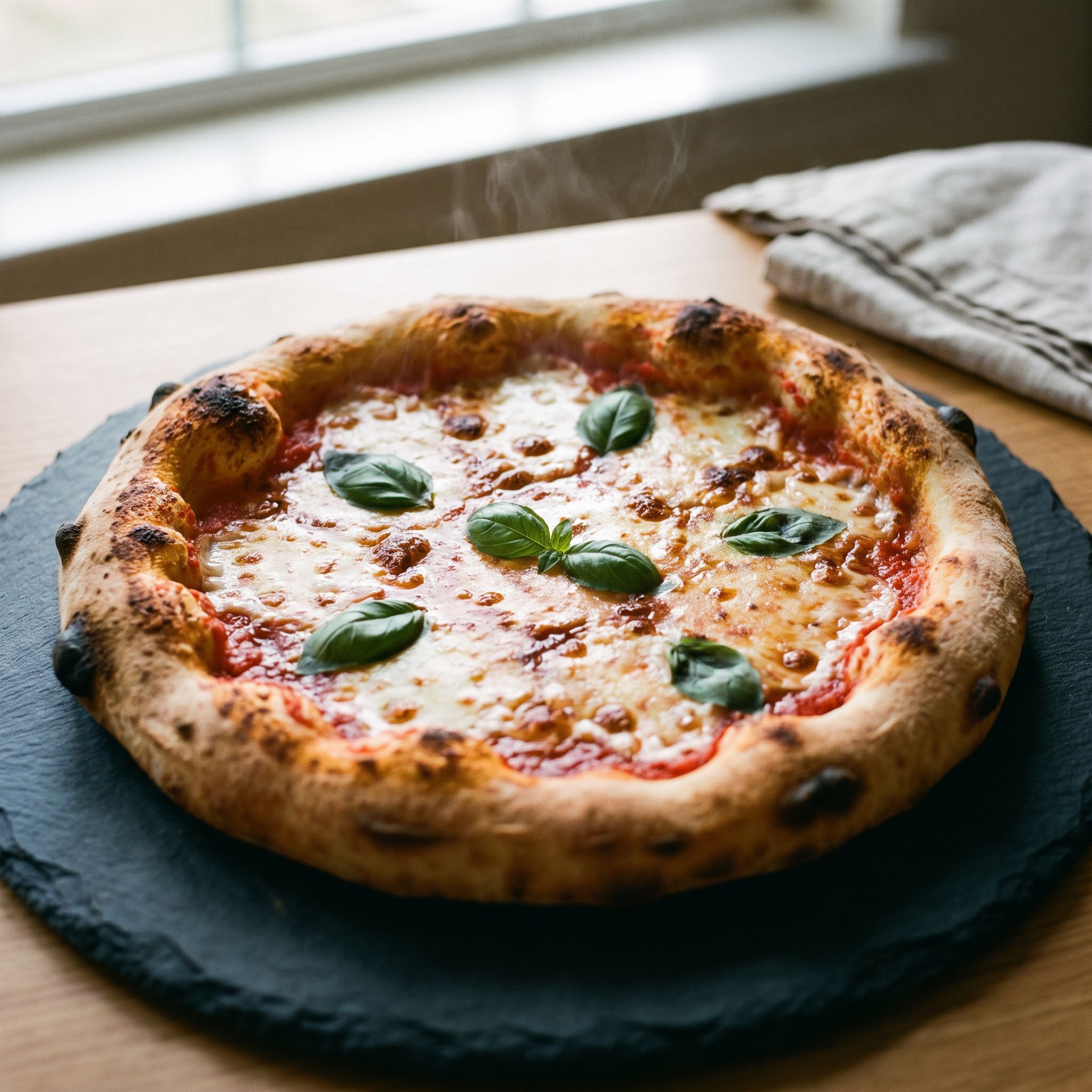
Description
Kneading mixes water with proteins called gliadin and glutenin in wheat flour so they link into long elastic strands of gluten. High oven heat then drives the Maillard reaction, in which amino acids from the proteins join with sugars to form new browned compounds that give the crust its color and flavor.
Cultural Background
Pizza dough and flatbreads with toppings were sold on the streets of Naples, Italy, by the late eighteenth century. In 1889 the pizzaiolo Raffaele Esposito, owner of a pizzeria in that city, was asked to prepare pizzas for Queen Margherita of Savoy during a royal visit with King Umberto I. He offered three versions, one topped with tomato, mozzarella, and basil. The queen liked it and a letter of thanks was sent to Esposito. He named that version Pizza Margherita after her. Earlier records show the same three toppings already existed in Naples decades before. The story, though partly disputed by historians, helped spread the dish beyond the city. Modern pizza traveled with Italian immigrants to the United States in the early twentieth century and became a standard meal there by the 1950s. In the dough, gluten strands form when gliadin and glutenin proteins in the flour absorb water and are worked together. Yeast added to the dough ferments sugars and releases carbon dioxide gas that stretches the gluten into bubbles. During baking above 140 degrees Celsius the Maillard reaction begins between amino acids and reducing sugars, creating the browned crust. The key craft step is thorough kneading until the dough feels smooth and elastic so the gluten network can trap gas evenly. A surprising true fact is that the letter of thanks still displayed in the original Naples pizzeria has a signature that historians have shown does not match the royal official's other documents from the same year.
Recipe Info
PREP TIME: 45 minutes
COOK TIME: 15 minutes
TOTAL TIME: 2 hours 30 minutes
SERVINGS: 4
DIFFICULTY: Medium
Ingredients
- 300 grams bread flour
- 180 milliliters warm water at 38 degrees Celsius
- 6 grams instant yeast
- 6 grams fine salt
- 15 milliliters olive oil
- 200 grams canned whole tomatoes, drained
- 5 milliliters olive oil for sauce
- 2 grams dried oregano
- 1 gram salt for sauce
- 200 grams low-moisture mozzarella cheese, shredded
- Adult-chosen toppings such as sliced vegetables or cured meats
Instructions
- Adult: Measure and mix the warm water with the yeast in a large bowl until the yeast dissolves.
- Add the flour, salt, and 15 milliliters olive oil to the bowl.
- Stir with a spoon until a shaggy dough forms.
- Turn the dough out onto a lightly floured surface and knead by hand for 8 to 10 minutes until it feels smooth and elastic.
- Place the dough in a lightly oiled bowl, cover it, and let it rise at room temperature for 1 hour until doubled.
- Adult: While the dough rises, crush the drained tomatoes with a fork, then stir in the 5 milliliters olive oil, oregano, and 1 gram salt to make the sauce.
- Adult: Heat the oven to 250 degrees Celsius with a baking stone or inverted baking sheet inside.
- Divide the risen dough into four equal pieces and shape each into a ball.
- On a floured surface, press and stretch one ball into a 25-centimeter round, keeping the edge slightly thicker.
- Spread 60 grams of sauce over the round, leaving a 1-centimeter border.
- Sprinkle 50 grams of shredded mozzarella over the sauce.
- Add chosen toppings in a single layer.
- Adult: Slide the pizza onto the hot stone or sheet and bake for 10 to 12 minutes until the crust edges are browned and the cheese bubbles.
- Repeat steps 9 through 13 with the remaining dough pieces.
Tips
- Dough that stays sticky after kneading means too little flour was added during mixing; dust the surface lightly and continue working it until it releases cleanly from your hands.
- Use all-purpose flour if bread flour is unavailable; the crust will be slightly less chewy but still workable.
- For a crispier base next time, let the shaped dough rest on the hot stone for 2 minutes before adding sauce and toppings.
Nutrition
Calories: 520
Protein: 22 grams
Carbs: 68 grams
Fat: 18 grams