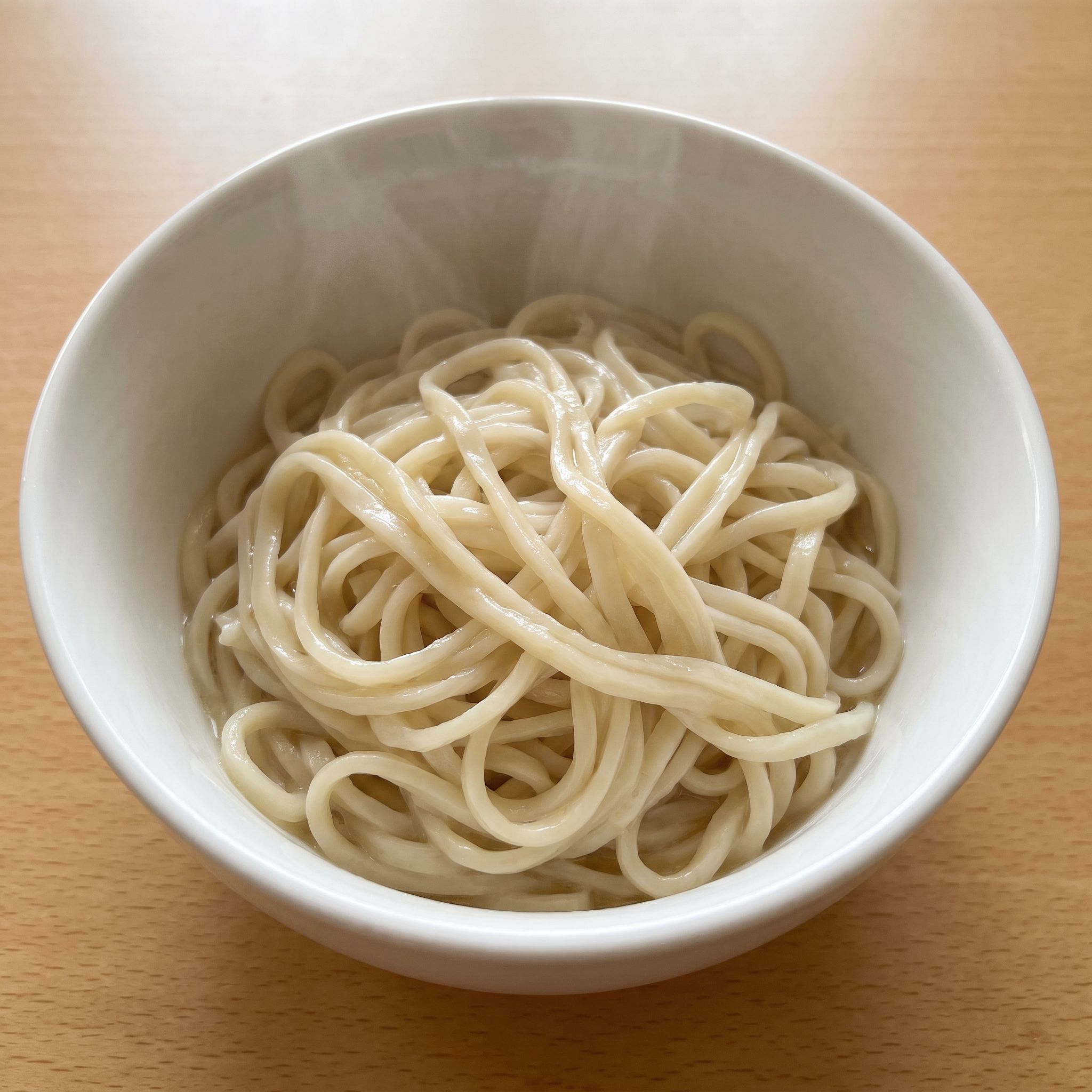
Description
The cook will practise adding dried noodles to a large volume of boiling salted water and stirring them at once so they separate. They will watch the starch granules in the noodles absorb water, swell, and release molecules that thicken the cooking liquid slightly as the temperature reaches the gelatinisation point.
Cultural Background
The earliest physical evidence of noodles comes from the Lajia site in northwestern China, where archaeologists found a bowl containing 4,000-year-old millet noodles made by the Qijia culture. Wheat-based noodles became common during the Eastern Han period between 25 and 220 CE. Noodles reached Japan in the 1870s through Chinese restaurants in Yokohama and evolved into ramen by 1910 at Rairai-ken in Tokyo. Starch gelatinisation occurs when the crystalline structure of starch granules breaks down between roughly 60 and 75 degrees Celsius in the presence of water, allowing amylose and amylopectin to leach out and create a viscous paste. This irreversible change gives the noodles their soft yet cohesive texture. The decisive craft step is using at least 1.5 to 2 litres of water per 100 grams of dried noodles and stirring immediately after adding them, which keeps the released starch diluted and prevents the strands from sticking together. In traditional Chinese practice, unbroken long noodles are eaten on birthdays because their continuous length symbolises longevity. Over 100 billion portions of instant noodles are consumed worldwide each year.
Recipe Info
PREP TIME: 5 minutes
COOK TIME: 10 minutes
TOTAL TIME: 15 minutes
SERVINGS: 2
DIFFICULTY: Easy
Ingredients
- 200 g dried wheat noodles
- 4 litres water
- 20 g salt (about 1 tablespoon)
Instructions
- Adult: Fill a large pot with the 4 litres of water and bring it to a rolling boil over high heat.
- Add the salt to the boiling water and stir once.
- Add the dried noodles all at once.
- Stir the noodles immediately and continuously for the first 30 seconds to keep them separate.
- Continue cooking over medium-high heat, stirring occasionally, for 7 to 9 minutes until the noodles are just tender but still have a slight resistance when bitten.
- Adult: Turn off the heat and drain the noodles in a colander, reserving 100 ml of the cooking water if desired for later use.
- Shake the colander gently to remove excess water.
Tips
- The most common problem is noodles clumping because too little water was used or they were not stirred at the start; check the water volume before adding the noodles.
- If salt is missing, the noodles can still be cooked in plain boiling water and seasoned after draining.
- Next time, cook the noodles 30 seconds less than the package time and finish them for 1 minute in a hot pan with a little fat to improve texture.
Nutrition
Calories: 220
Protein: 7 g
Carbs: 45 g
Fat: 1 g