Description
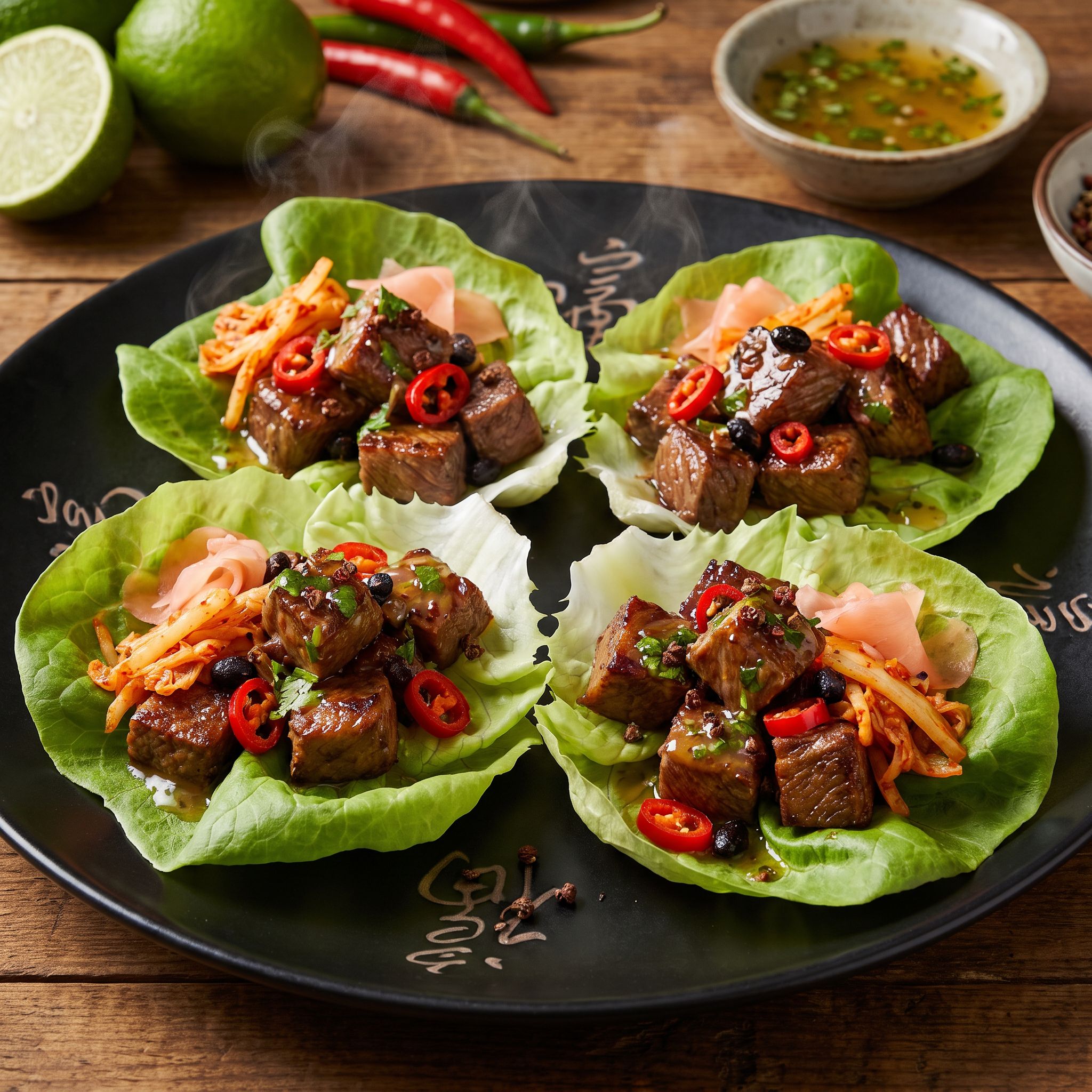
Picanha cubes are wok-seared with Hunan pickled chilies, garlic, and fermented black beans, then finished with a Sichuan mala kick and Thai chili-lime dressing. Served in crisp lettuce cups with Korean kimchi and Japanese pickled ginger for crunch and tang. Ready in 25 minutes, these wraps deliver bold, layered heat and freshness centered on the succulent beef.
Cultural Background
This dish fuses elements from Hunan and Sichuan Chinese cuisines through its use of pickled chilies, fermented black beans, and mala spices from Sichuan peppercorns, while incorporating Thai chili-lime flavors and Vietnamese-inspired fish sauce in the dressing. Lettuce wraps draw from Korean ssam and Vietnamese fresh rolls, with kimchi and pickled ginger adding Korean and Japanese touches; broader influences include Cantonese oyster sauce in the marinade, Shanghai soy sauces, Xinjiang cumin notes, Taiwanese basil accents, Laotian herbal freshness, and Okinawan emphasis on balanced bold flavors, all centered on Brazilian picanha adapted to wok techniques.
Recipe Info
PREP TIME: 15 minutes
COOK TIME: 10 minutes
TOTAL TIME: 25 minutes
SERVINGS: 4
DIFFICULTY: Medium
Ingredients
- 1 pound picanha, cut into 1-inch cubes (trim excess fat cap if desired but retain some for flavor)
- 1 tablespoon oyster sauce (Cantonese style)
- 1 teaspoon light soy sauce
- 1 teaspoon cornstarch
- 1/2 teaspoon baking soda (for tenderizing)
- 2 tablespoons neutral oil (such as canola or grapeseed), divided
- 4 cloves garlic, thinly sliced
- 2 tablespoons fermented black beans, rinsed and roughly chopped
- 4-6 pickled red chilies or Thai bird's eye chilies, sliced (Hunan style)
- 1 teaspoon Sichuan peppercorns, toasted and ground (for mala kick)
- 1 red bell pepper, cut into 1-inch pieces
- 2 green onions, cut into 2-inch lengths
- 8 large butter lettuce leaves or iceberg lettuce cups
- 1/2 cup Korean kimchi, drained and chopped
- 2 tablespoons Japanese pickled ginger, sliced
- For Thai chili-lime dressing: 3 tablespoons lime juice, 2 tablespoons fish sauce, 1 tablespoon palm sugar or brown sugar, 1 minced garlic clove, 1 sliced Thai chili, 1 tablespoon chopped cilantro
Instructions
- In a bowl, combine picanha cubes with oyster sauce, light soy sauce, cornstarch, and baking soda; mix well and let marinate for 10 minutes at room temperature to tenderize and flavor the meat.
- Prepare the chili-lime dressing by whisking together lime juice, fish sauce, palm sugar, minced garlic, sliced Thai chili, and cilantro in a small bowl until sugar dissolves; set aside.
- Heat a wok or large skillet over high heat until smoking hot, about 1-2 minutes; add 1 tablespoon oil and swirl to coat.
- Add the marinated picanha cubes in a single layer and sear undisturbed for 1-2 minutes until browned on one side, then stir-fry for another 2 minutes until just cooked through but still tender (internal temperature around 130-135°F for medium-rare); remove to a plate.
- Add remaining 1 tablespoon oil to the wok; stir-fry garlic, fermented black beans, and pickled chilies for 30-45 seconds until fragrant and aromatic without burning.
- Add bell pepper and stir-fry for 1 minute until slightly softened; return picanha to the wok along with ground Sichuan peppercorns and green onions.
- Toss everything together for 30 seconds to combine flavors and finish with a Sichuan mala numbing heat; remove from heat.
- Arrange lettuce cups on a platter; spoon picanha mixture into each cup, top with kimchi and pickled ginger, and drizzle with Thai chili-lime dressing just before serving.
Tips
- Score and render a small amount of picanha fat cap separately in the wok first for extra richness if using the full cut.
- Do not overcrowd the wok when searing the beef to ensure proper browning instead of steaming.
- Substitute picanha with flank steak or sirloin if unavailable, or use gochujang for extra Korean heat in the stir-fry.
Nutrition
Calories: 380
Protein: 28g
Carbs: 18g
Fat: 22g
Tags
Thai, Vietnamese, Laotian, Japanese, Cantonese Chinese, Hunan Chinese, Sichuan Chinese, Shanghai Chinese, Xinjiang Chinese, Korean, Taiwanese, Okinawan