Description
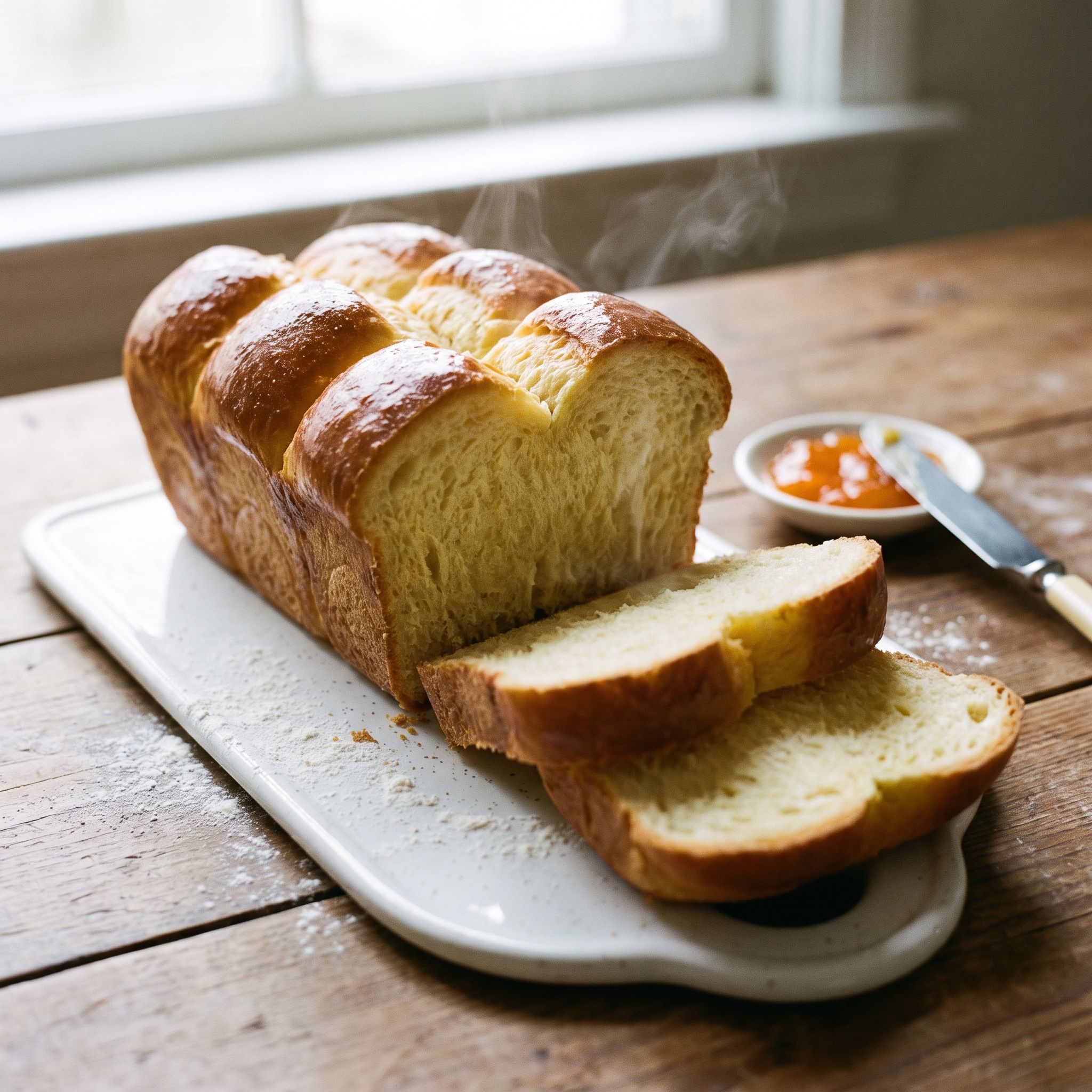
This enriched loaf features a tender, flaky crumb with subtle tang from sourdough starter balanced by butter, eggs, and a touch of sugar. The dough undergoes a long cold ferment for depth of flavor then bakes into a golden, pull-apart loaf ideal for toast or sandwiches. Stand mixer or hand kneading creates the signature soft texture in about 4-6 hours active time plus overnight proof.
Cultural Background
Brioche originated in France as an enriched bread using eggs, butter, and milk, with roots tracing back to at least the 17th century in European baking traditions where it was a luxury item for special occasions. The technique of incorporating high amounts of fat and eggs creates its signature tender texture, drawing from French viennoiserie methods. Modern sourdough versions adapt this classic by replacing commercial yeast with natural fermentation for added flavor complexity and digestibility, blending French heritage with contemporary artisan bread practices.
Recipe Info
PREP TIME: 1 hour active plus fermentation
COOK TIME: 35 minutes
TOTAL TIME: 20 hours including overnight proof
SERVINGS: 12
DIFFICULTY: Medium
Ingredients
- 540 g bread flour
- 100 g active sourdough starter, fed and bubbly
- 200 g whole milk, warmed to about 37C
- 2 large eggs, room temperature
- 50 g granulated sugar
- 10 g salt
- 120 g unsalted butter, softened to room temperature and cubed
- 1 egg plus 1 tablespoon water for egg wash
- Extra butter for brushing after baking
Instructions
- Warm the milk to around 37C and dissolve the sugar in it using a stand mixer bowl or large mixing bowl.
- Add the sourdough starter, bread flour, and eggs to the milk mixture and mix into a rough shaggy dough. Let it rest for 30 minutes to hydrate.
- Add the softened butter and salt to the dough. Using a stand mixer with dough hook on medium speed or by hand, knead vigorously for 10-20 minutes until the dough becomes silky, elastic, smooth, and passes the windowpane test where a small piece stretches thin without tearing.
- Transfer the dough to a lightly oiled bowl, cover, and allow bulk fermentation at room temperature (around 75-78F) for 4-6 hours until it has risen about 50-100% and looks puffy with some bubbles.
- Gently degas the dough, shape it into a loaf by dividing into 4-6 equal pieces, rolling each into a ball or cylinder, and placing snugly in a greased 9x5 inch loaf pan.
- Cover the shaped loaf and refrigerate for an overnight cold proof of 8-12 hours to develop flavor and make handling easier.
- The next day, remove from fridge and let proof at room temperature until puffy and doubled in the pan, about 2-4 hours depending on temperature.
- Preheat oven to 180C/350F. Brush the top generously with egg wash made from 1 egg beaten with 1 tablespoon water.
- Bake for 30-35 minutes until deep golden brown on top; if browning too quickly, cover loosely with foil and reduce temperature slightly. Internal temperature should reach about 190F.
- Immediately brush the hot loaf with extra butter, remove from pan, and cool completely on a wire rack before slicing.
Tips
- Use a stand mixer for easier butter incorporation as the dough starts very sticky but firms up with proper kneading; avoid adding extra flour.
- Do not rush the cold ferment as it builds the signature tangy depth and improves texture.
- For a dairy-free version, substitute plant-based butter and milk while keeping proportions similar.
Nutrition
Calories: 250
Protein: 6 g
Carbs: 32 g
Fat: 11 g