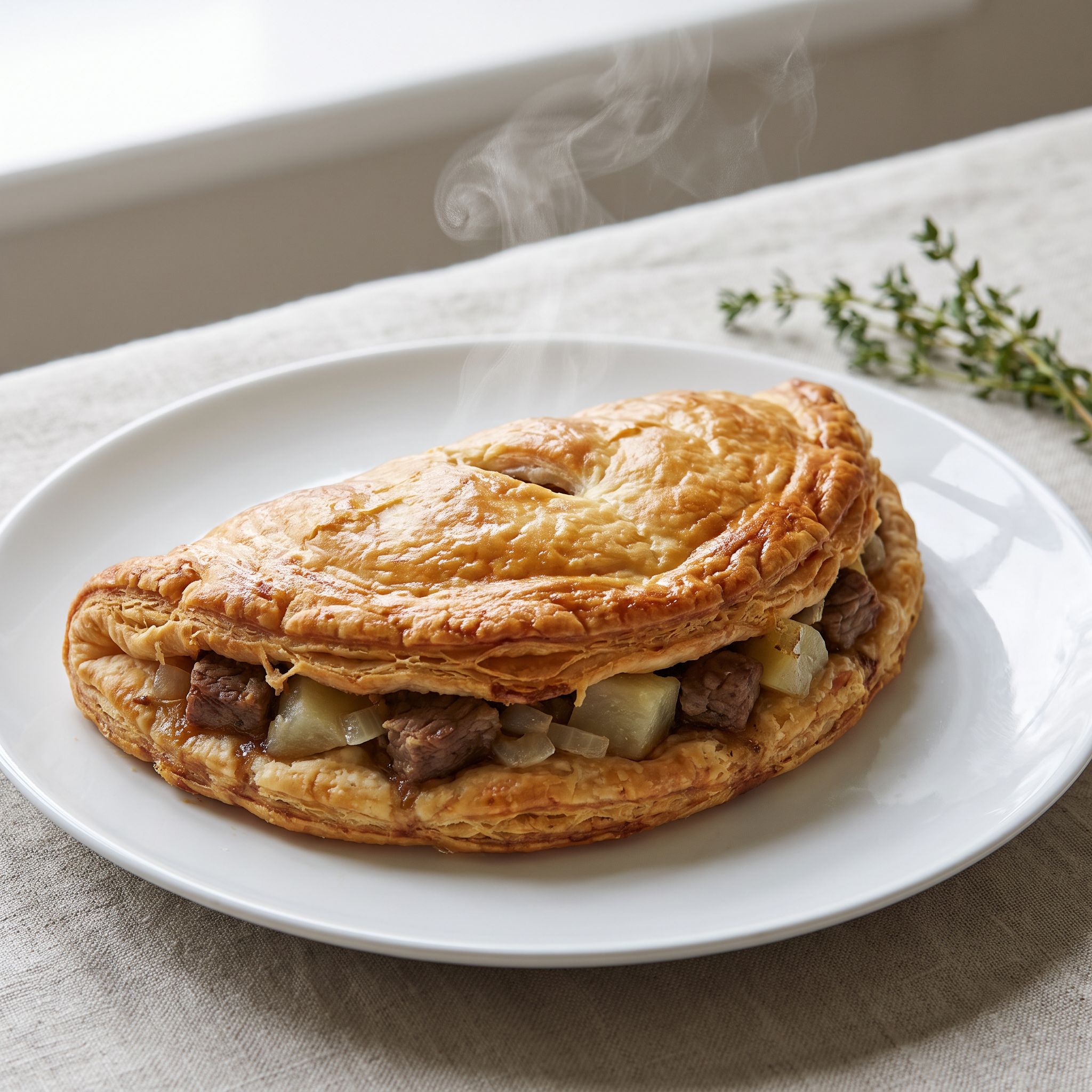
Description
A traditional handheld Cornish-style pasty featuring tender beef skirt, waxy potatoes and onions seasoned simply with salt and pepper inside flaky shortcrust pastry. The filling cooks raw inside the crimped pastry for juicy results with no swede. Bake at 200°C for 50-55 minutes after chilling. Total time around 1 hour 40 minutes including prep.
Cultural Background
The Cornish pasty originated in Cornwall, England, as a portable meal for tin miners who needed a hearty, self-contained lunch that could be eaten by hand without utensils. Protected Geographical Indication status since 2011 specifies the traditional ingredients and raw filling method, though variations without swede are common outside strict PGI rules. The side-crimped D-shape and simple seasoning reflect centuries-old working-class traditions in the region, with the pastry acting as both container and edible handle.
Recipe Info
PREP TIME: 50 minutes
COOK TIME: 50 minutes
TOTAL TIME: 1 hour 40 minutes
SERVINGS: 4
DIFFICULTY: Medium
Ingredients
- 500 g strong white bread flour, plus extra for dusting
- 1 tsp salt
- 125 g unsalted butter, chilled and diced
- 125 g lard, chilled and diced
- 175 ml cold water, approximately
- 1 medium egg, beaten with a dash of milk, for egg wash
- 400 g beef skirt, cut into 1 cm cubes
- 400 g waxy potatoes, peeled and cut into 1 cm dice
- 200 g brown onions, peeled and finely sliced
- Salt and freshly ground black pepper, to taste (generous seasoning)
- 20 g unsalted butter, cut into small pieces, for dotting on filling
Instructions
- To make the pastry, place the flour and salt in a large bowl. Rub in the chilled butter and lard with your fingertips until the mixture resembles coarse breadcrumbs. Gradually add the cold water, mixing with a knife until the dough just comes together into a firm ball. Knead briefly until smooth and elastic, then wrap in cling film and chill in the refrigerator for at least 30 minutes.
- While the pastry chills, prepare the raw filling by combining the cubed beef skirt, diced waxy potatoes and sliced onions in a bowl. Season generously with salt and pepper, tossing to distribute evenly. Set aside in the refrigerator until ready to assemble.
- Preheat the oven to 200°C. Line a large baking tray with baking paper. Divide the chilled pastry into 4 equal portions. On a lightly floured surface, roll each portion into a circle approximately 20 cm in diameter.
- Divide the seasoned filling evenly among the 4 pastry circles, mounding it slightly to one side of each circle and leaving a 2 cm border. Dot the filling with small pieces of the extra butter.
- Brush the edges of each pastry circle with a little egg wash. Fold the pastry over the filling to form a D-shape, pressing the edges together firmly. Crimp the sealed edge by folding and twisting it along the side to create a decorative rope pattern, ensuring a tight seal.
- Place the assembled pasties on the prepared tray. Brush the tops and sides generously with the remaining egg wash. Cut a small steam vent in the top of each pasty. Chill the assembled pasties in the refrigerator for 15-20 minutes.
- Bake in the preheated oven at 200°C for 50-55 minutes until the pastry is deep golden brown and crisp. The internal filling should be tender and juicy. Allow to rest for 5-10 minutes before serving.
Tips
- Keep all pastry ingredients and the dough as cold as possible throughout to ensure a flaky, sturdy crust that holds the raw filling without leaking.
- Do not pre-cook the filling as the traditional method relies on the raw ingredients steaming inside the sealed pastry to create natural gravy.
- For a gluten-free version, substitute a strong gluten-free bread flour blend, though the texture will be slightly less elastic.
Nutrition
Calories: 780
Protein: 29 g
Carbs: 68 g
Fat: 42 g